



Explore differences between RFID and barcode technologies and understand why AI-powered RFID enables faster tracking, higher accuracy, and automated inventory workflows.
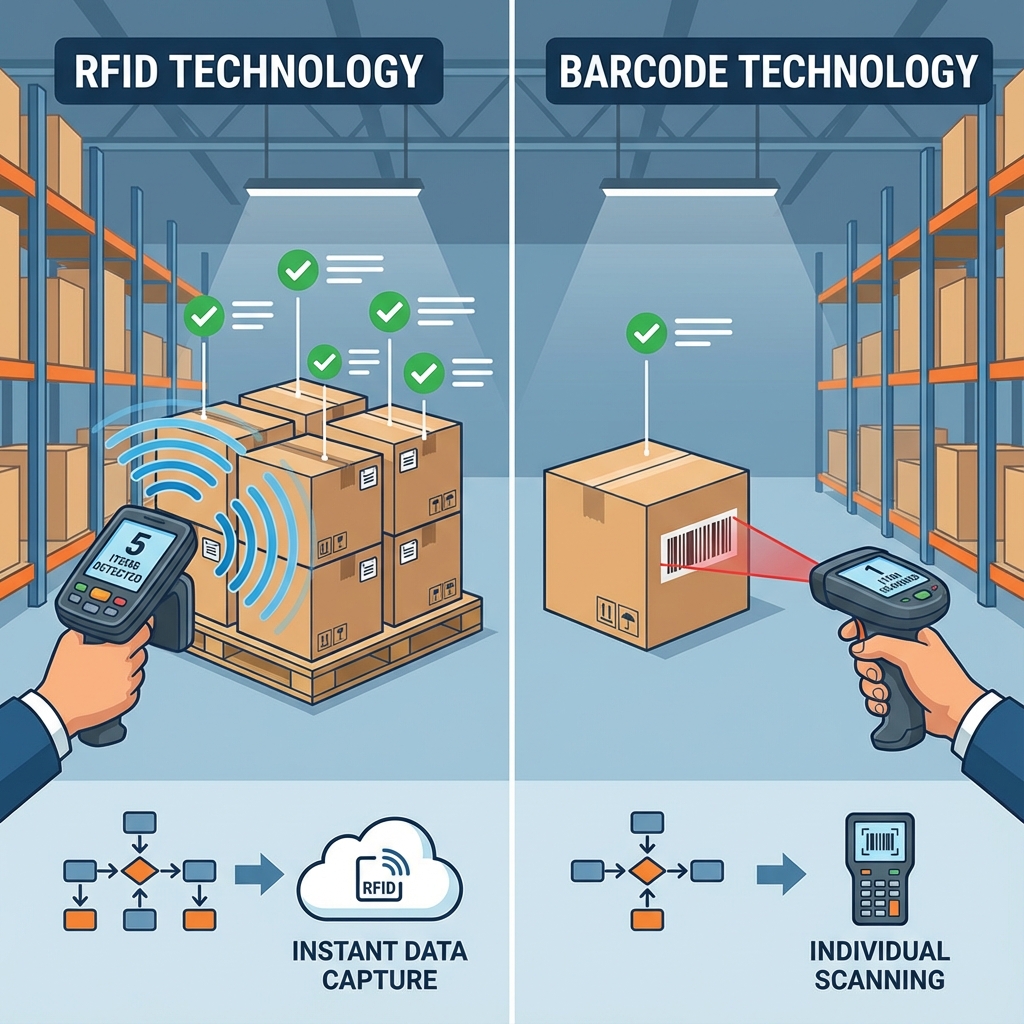
While barcodes have been the standard for decades, RFID technology is rapidly gaining adoption due to its superior capabilities. This guide compares both technologies across key factors to help you decide which is best for your operation.
Barcode Technology
Barcodes are optical machine-readable representations of data. They require line-of-sight scanning and can only be read one at a time. Barcodes are inexpensive, widely adopted, and work well for many applications.
RFID Technology
RFID uses radio waves to automatically identify and track tags. It doesn't require line-of-sight, can read multiple items simultaneously, and provides real-time data. RFID is more expensive but offers significantly greater capabilities.
| Feature | RFID | Barcode |
|---|---|---|
| Scanning Speed | Hundreds per second | One at a time |
| Line of Sight | Not required | Required |
| Read Range | Up to 30+ feet | Few inches |
| Durability | Very high | Moderate |
| Data Capacity | Large (KB) | Limited (bytes) |
| Cost per Tag | $0.10 - $20 | $0.01 - $0.10 |
While RFID has higher upfront costs, the ROI often justifies the investment:
Initial Investment
Ongoing Costs
For high-volume operations, RFID typically pays for itself within 12-24 months through labor savings and improved accuracy.
When to Choose Barcodes:
When to Choose RFID:
Consider these factors when choosing between RFID and barcodes:
Many businesses find that a hybrid approach works best, using RFID for high-value or high-volume items and barcodes for everything else.
Explore more articles about RFID technology, inventory management, and industry solutions